AI Infographics
Visual breakdowns of complex AI engineering patterns. Each one has a helicopter view and detailed deep-dives you can download.
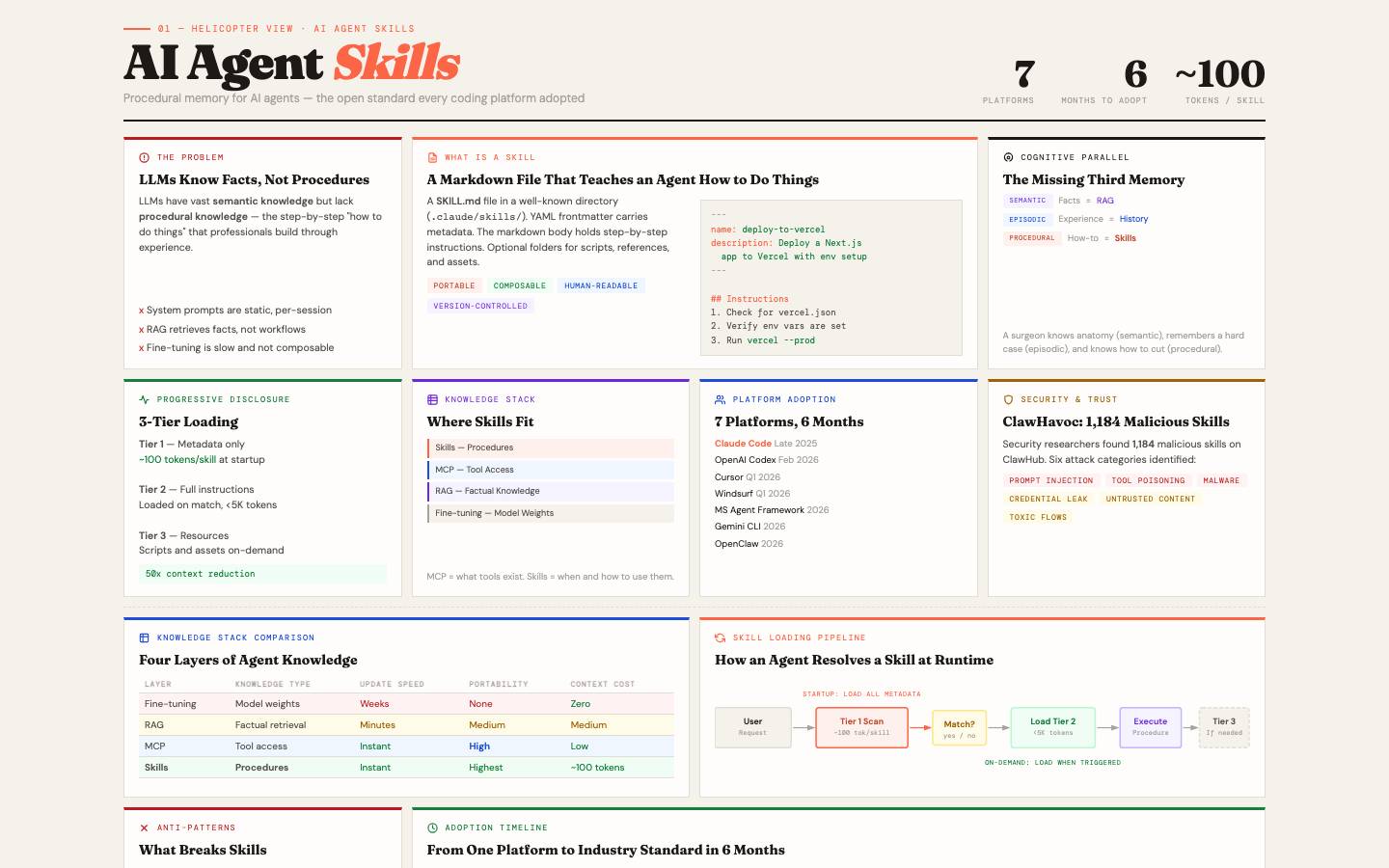
AI Agent Skills
The skill.md open standard for procedural knowledge in AI agents. Progressive disclosure, knowledge stack, platform adoption, and security.
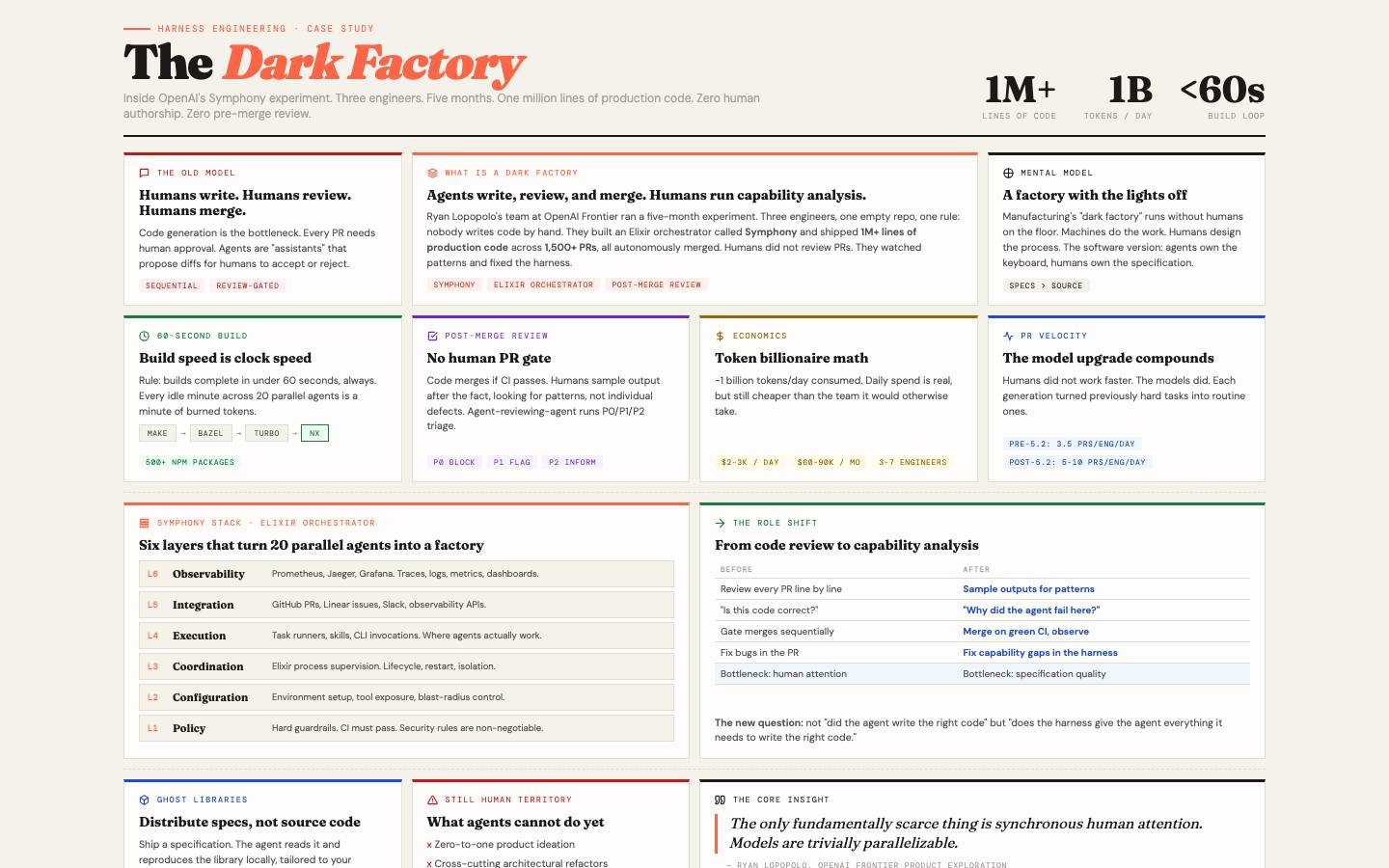
Dark Factory Series
Deep dives into OpenAI's harness engineering experiment: Symphony, the 60-second build loop, post-merge review, token economics, and ghost libraries
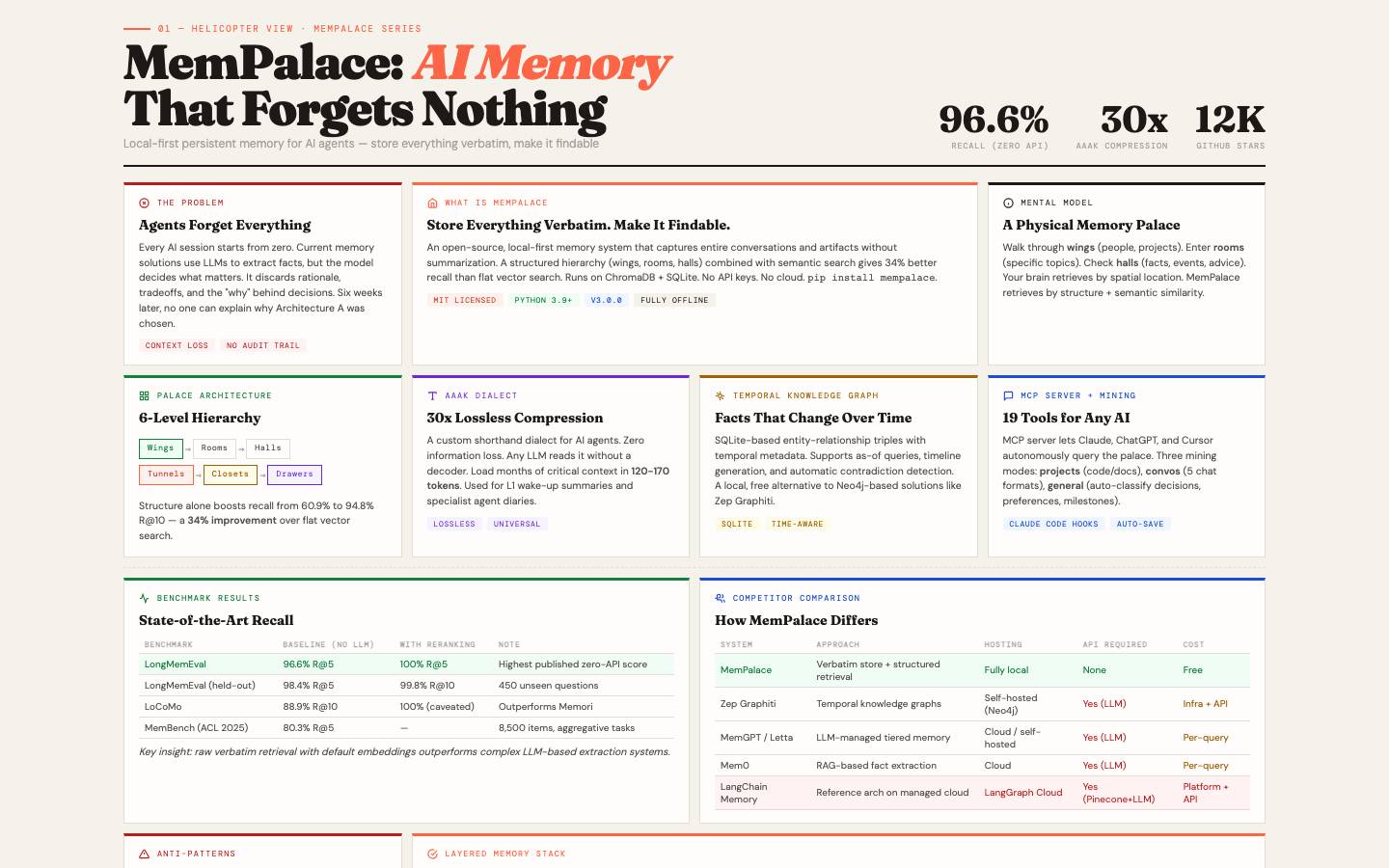
MemPalace
Local-first AI memory system for agents — store everything, make it findable
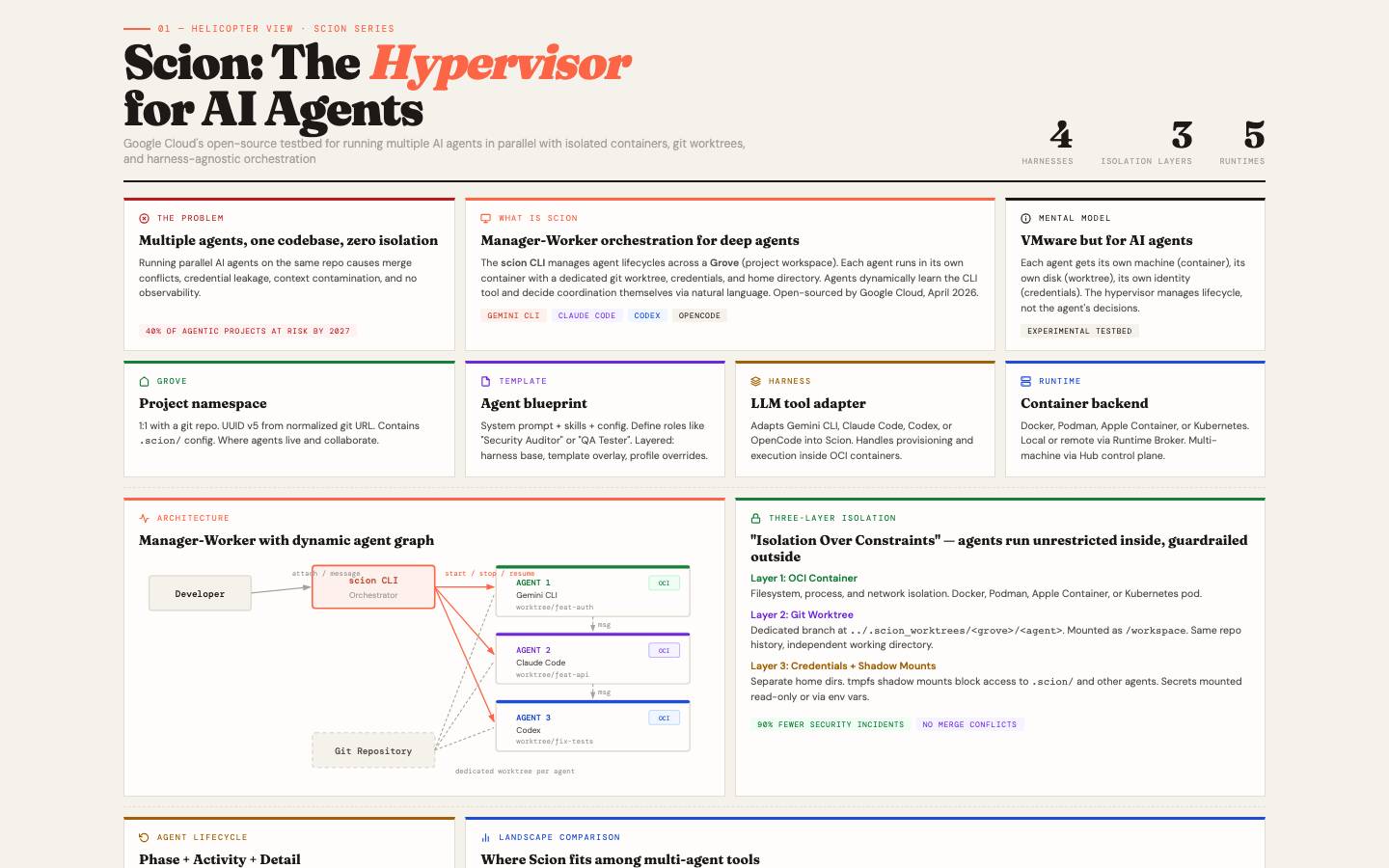
Scion Series
Deep dives into Google Cloud's Scion platform for multi-agent orchestration
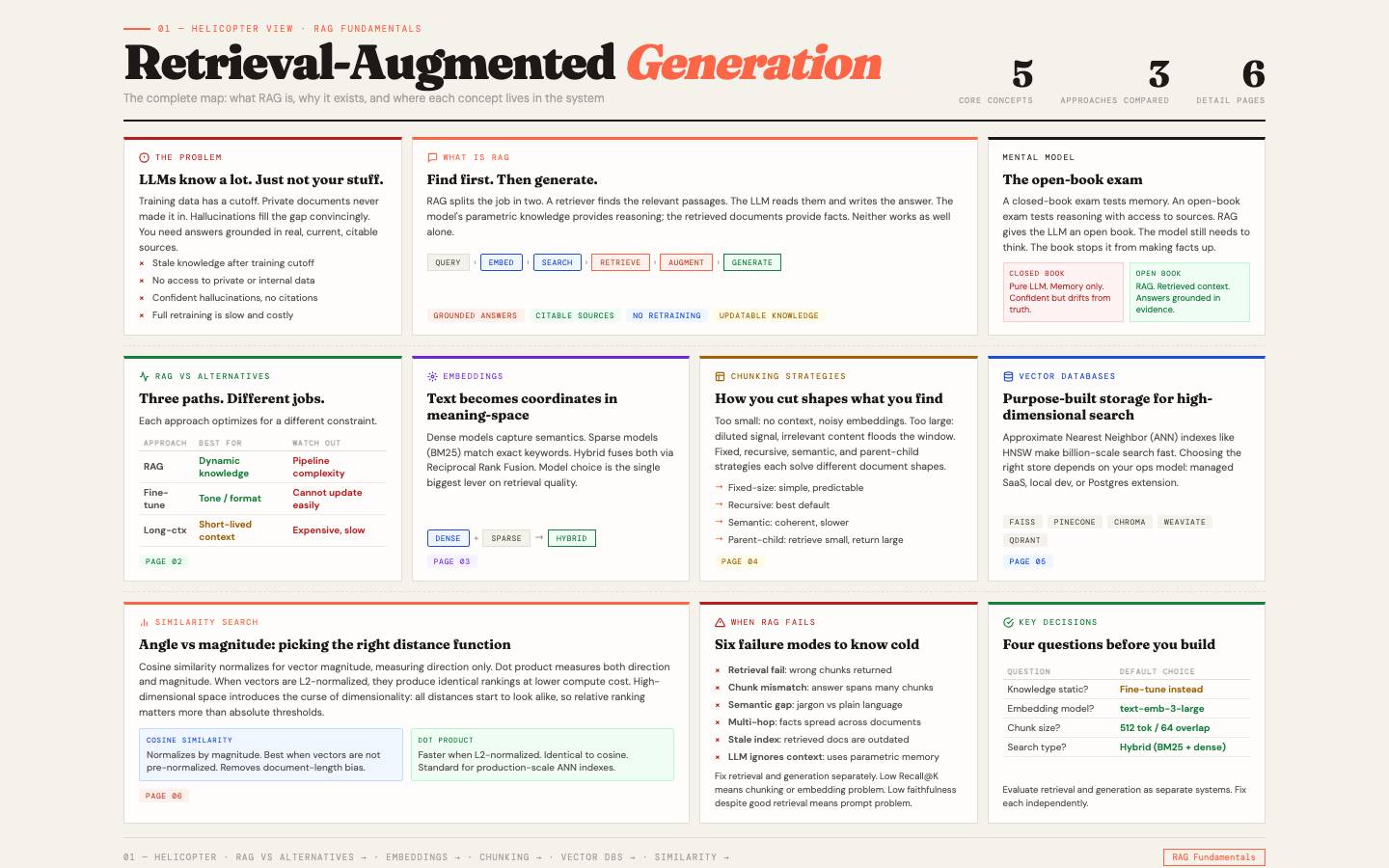
RAG Engineering
Agent Evals: From Production Failures
The best agent evals are not designed — they are discovered from real traces, real users, and real failures. A helicopter view of all 9 concepts.
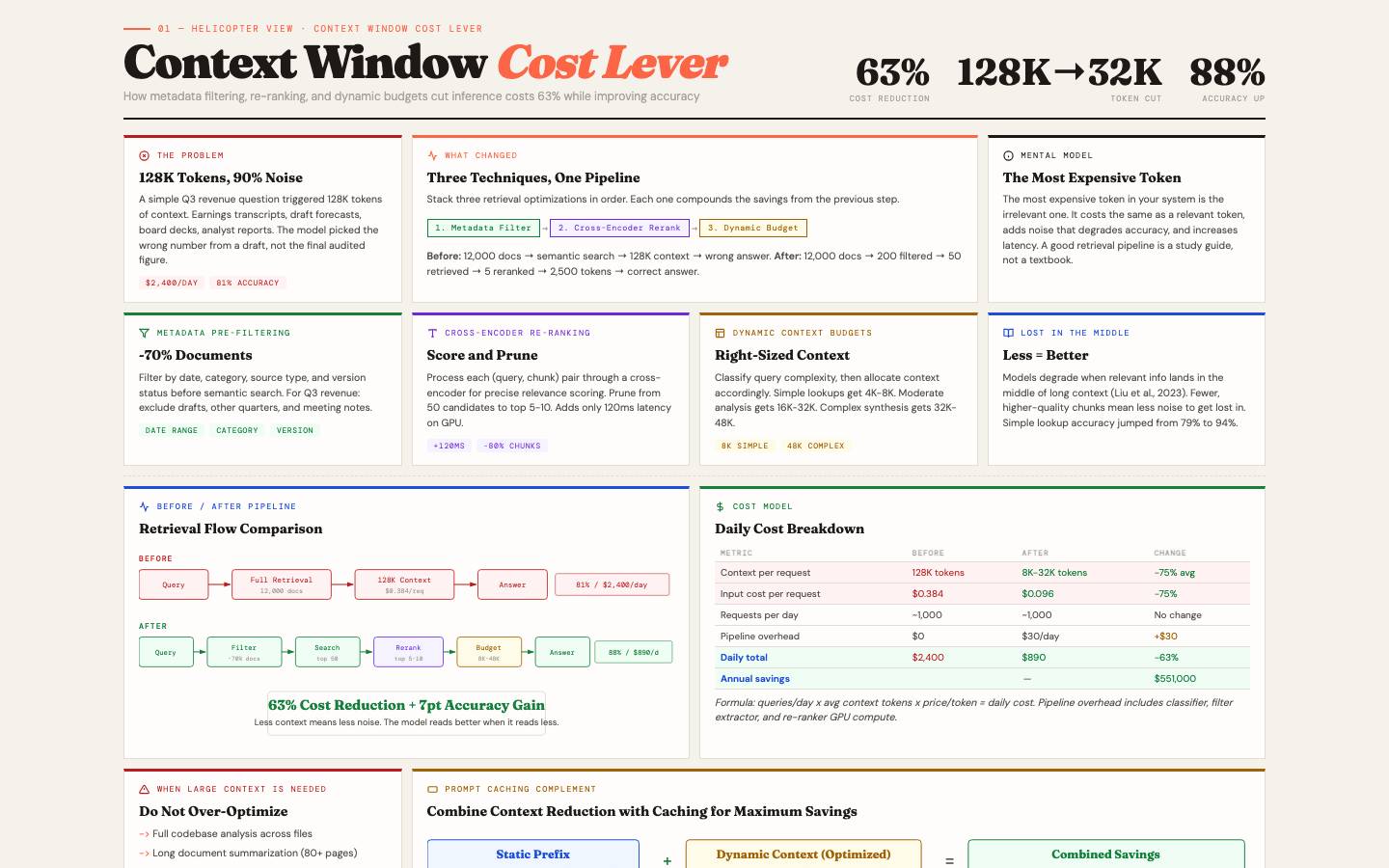
Context Window Cost Lever: Helicopter View
Why context window management is the single biggest cost lever for AI agents. Token budgets, summarization strategies, and pruning techniques that cut inference costs without losing accuracy.
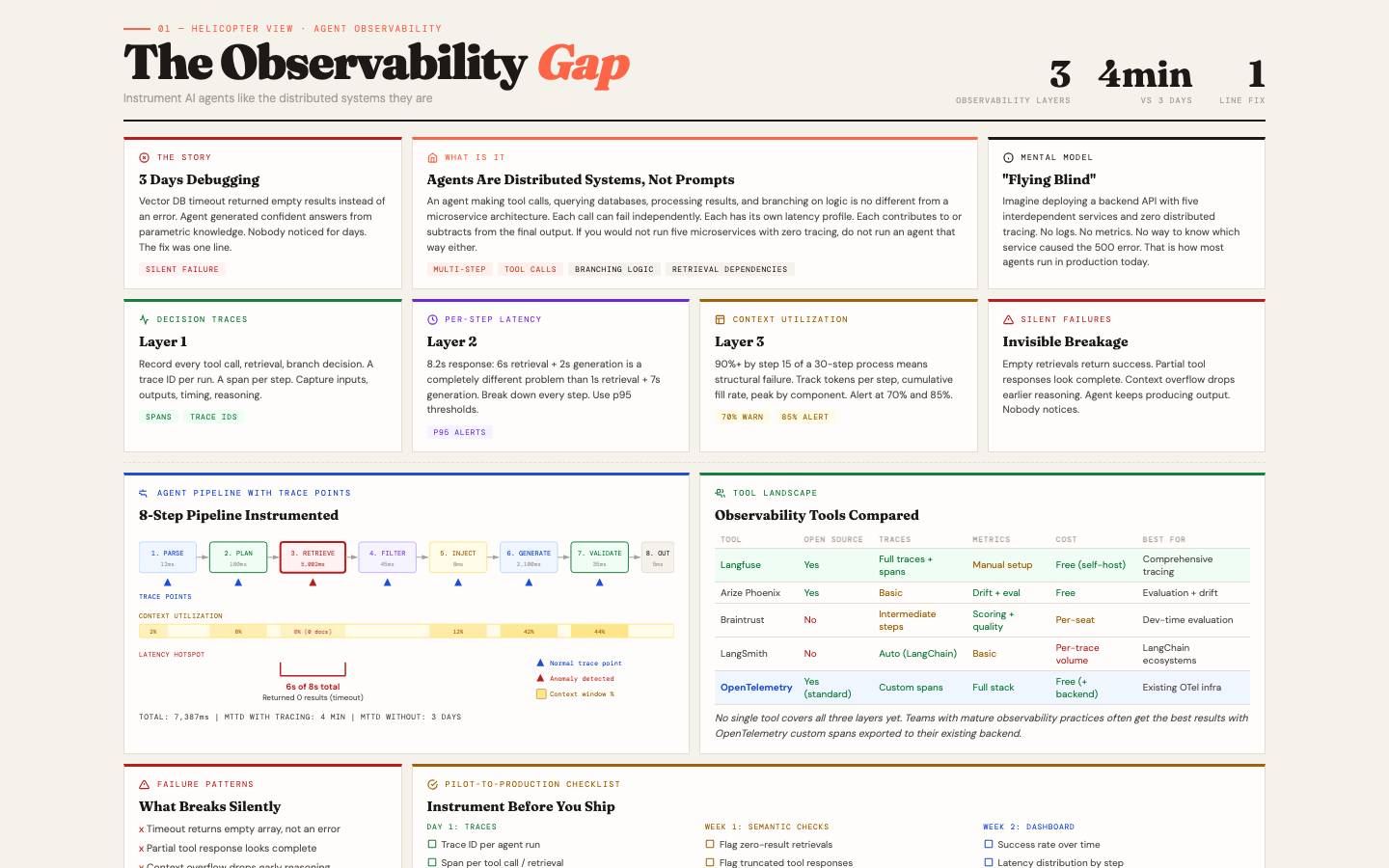
The Observability Gap: Helicopter View
Three observability layers every AI agent needs: decision traces, per-step latency, and context window utilization monitoring.
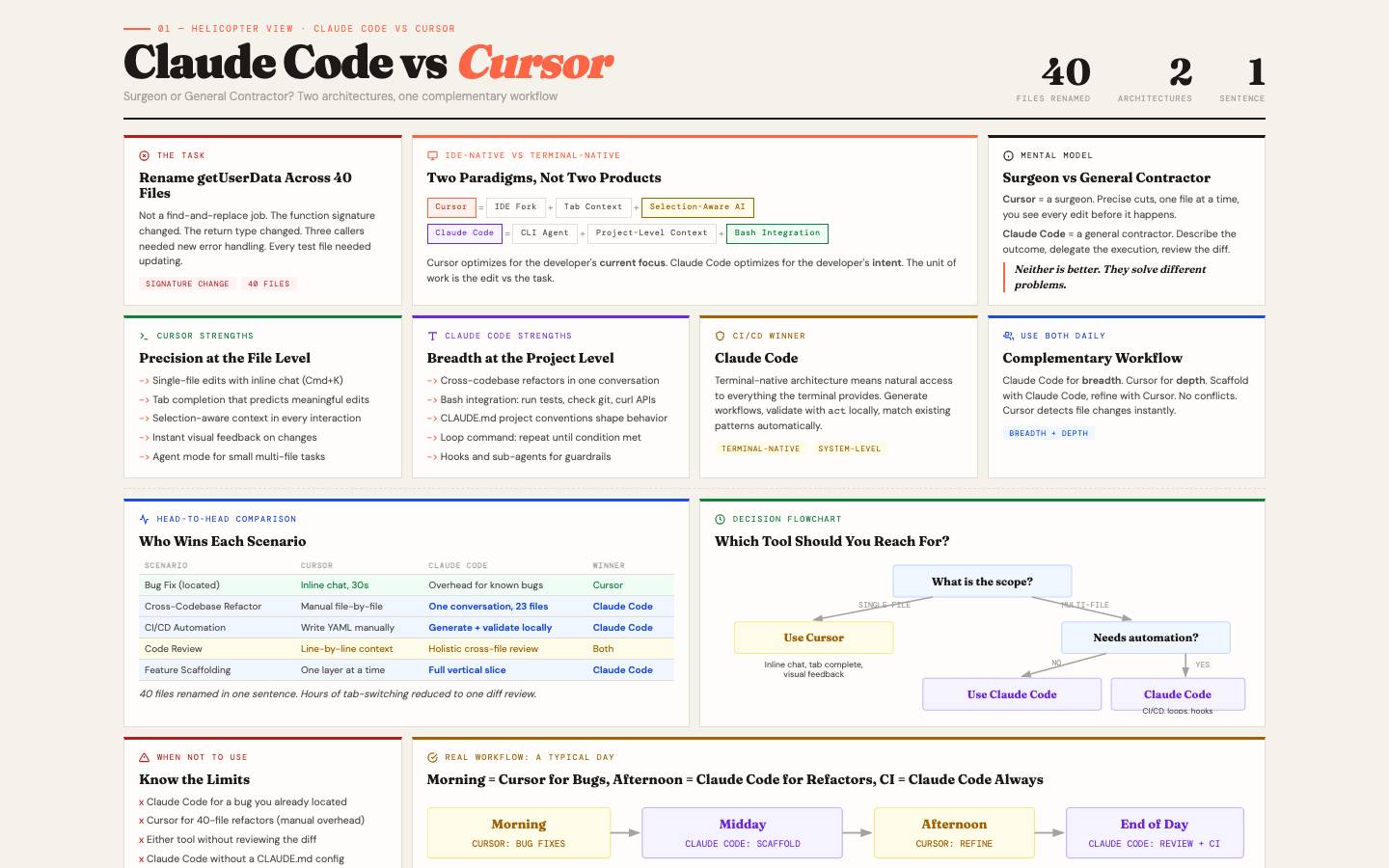
Claude Code vs Cursor: Helicopter View
Side-by-side comparison of two leading AI coding tools. Architecture differences, context strategies, and where each one wins for different development workflows.
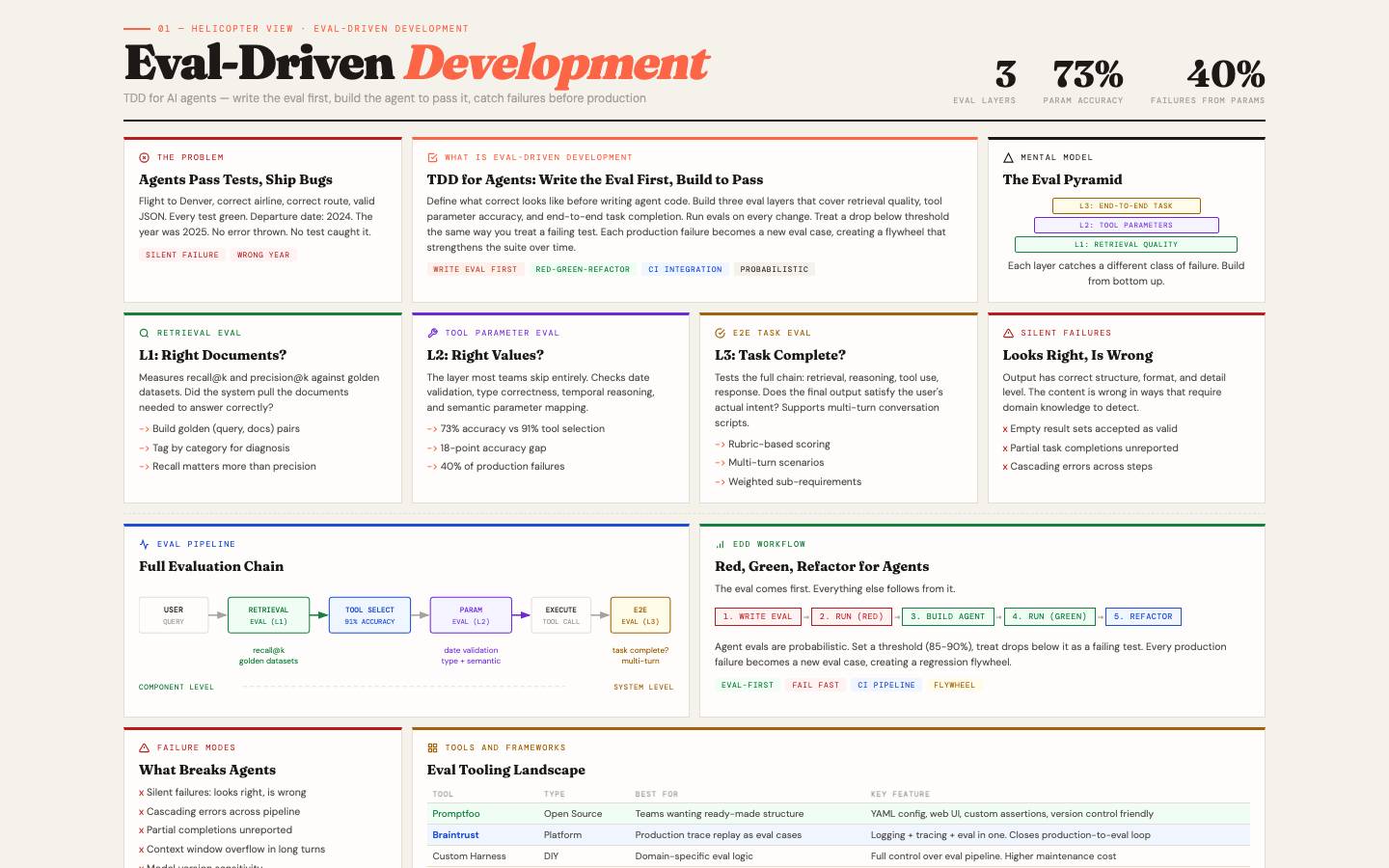
Eval-Driven Development: Helicopter View
TDD for AI agents. Three eval layers (retrieval, tool parameters, end-to-end) that catch silent failures before production. 73% parameter accuracy vs 91% tool selection reveals the gap most teams miss.
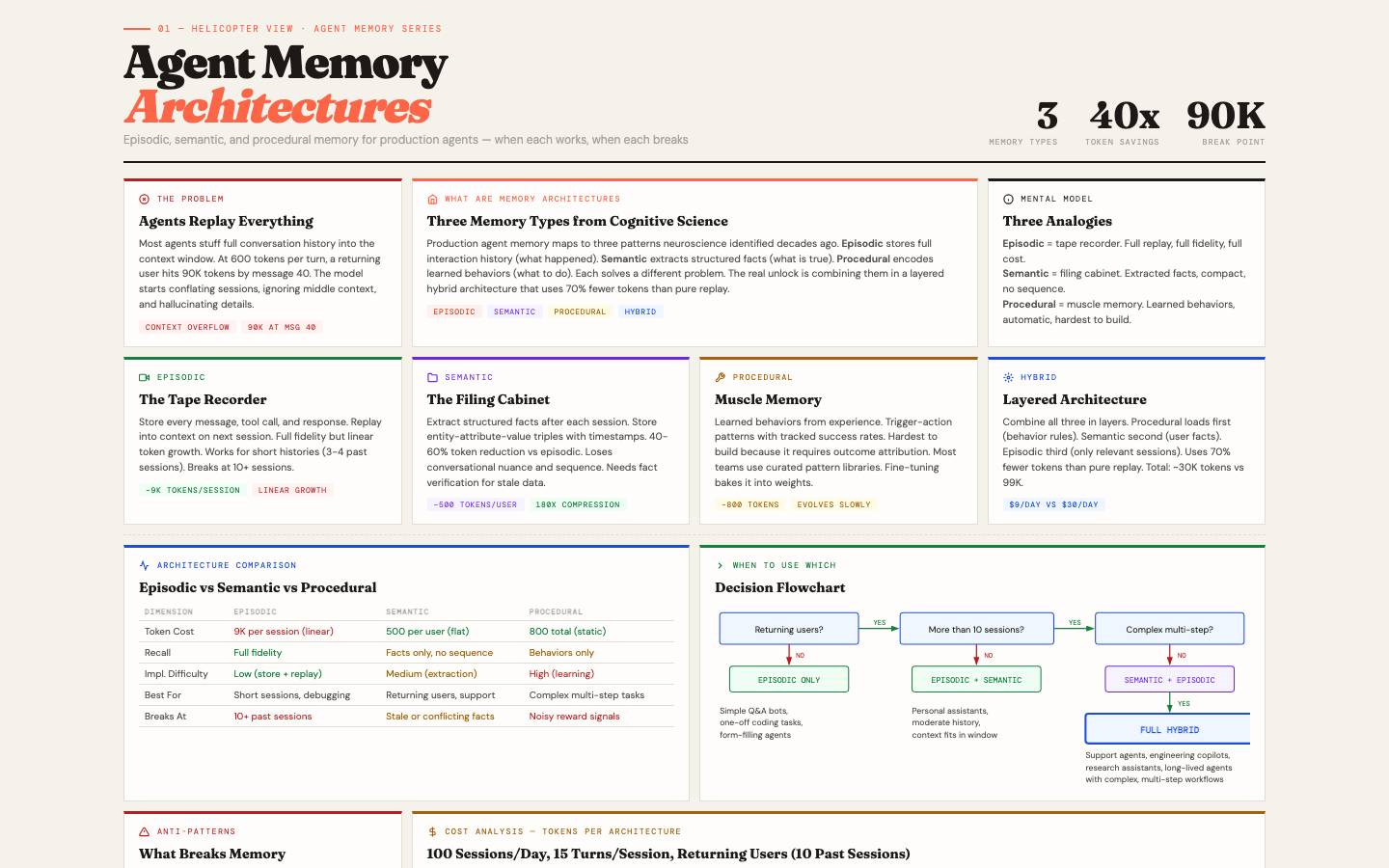
Agent Memory Architectures: Helicopter View
How AI agents remember across sessions. Working memory, episodic recall, and semantic indexing patterns that turn stateless LLM calls into persistent reasoning systems.
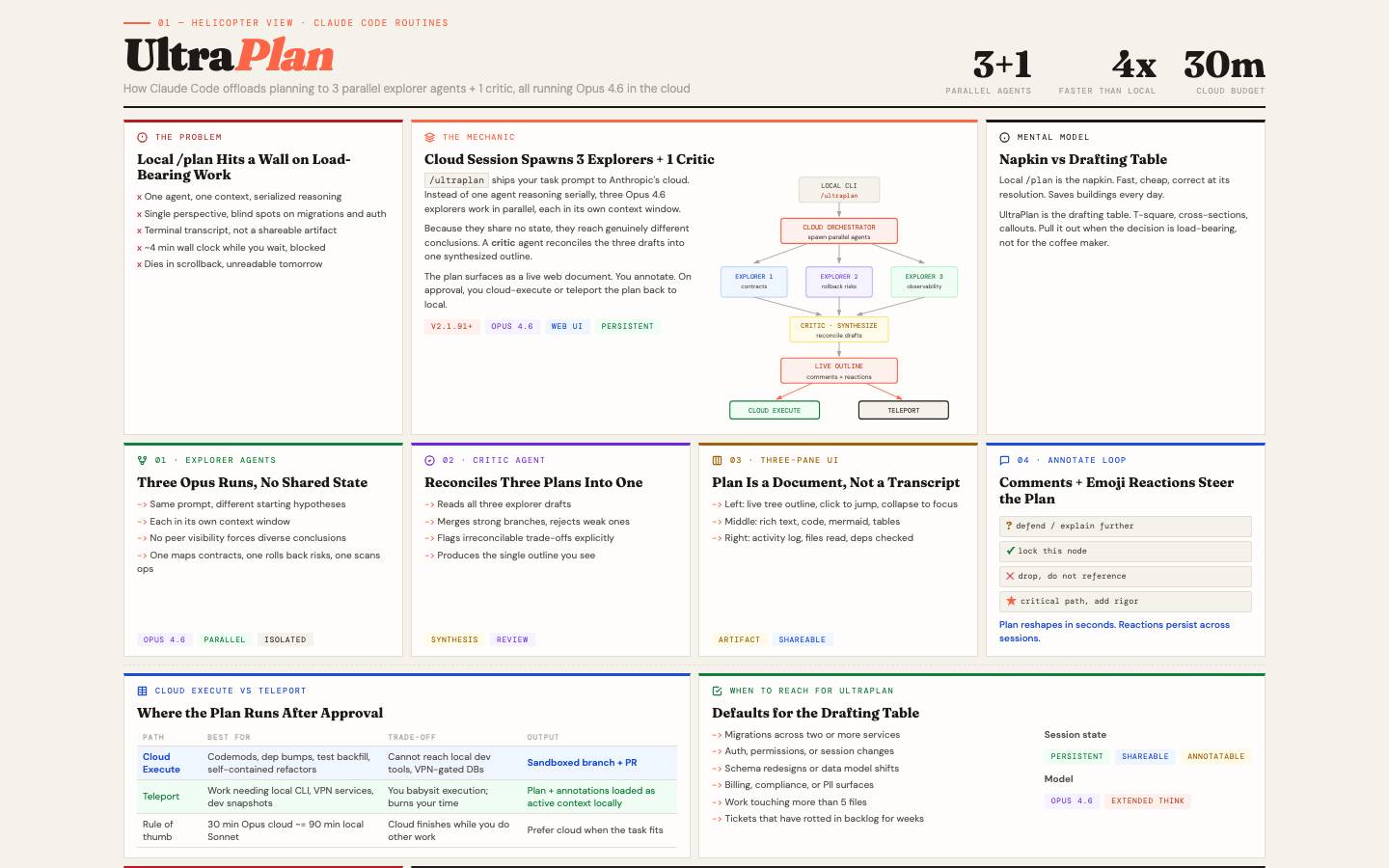
UltraPlan: Claude Code's Multi-Agent Planning Architecture
How Claude Code offloads planning to Anthropic's cloud, where 3 parallel Opus 4.6 explorers plus 1 critic synthesize a single annotated plan you can teleport back or execute in the cloud.
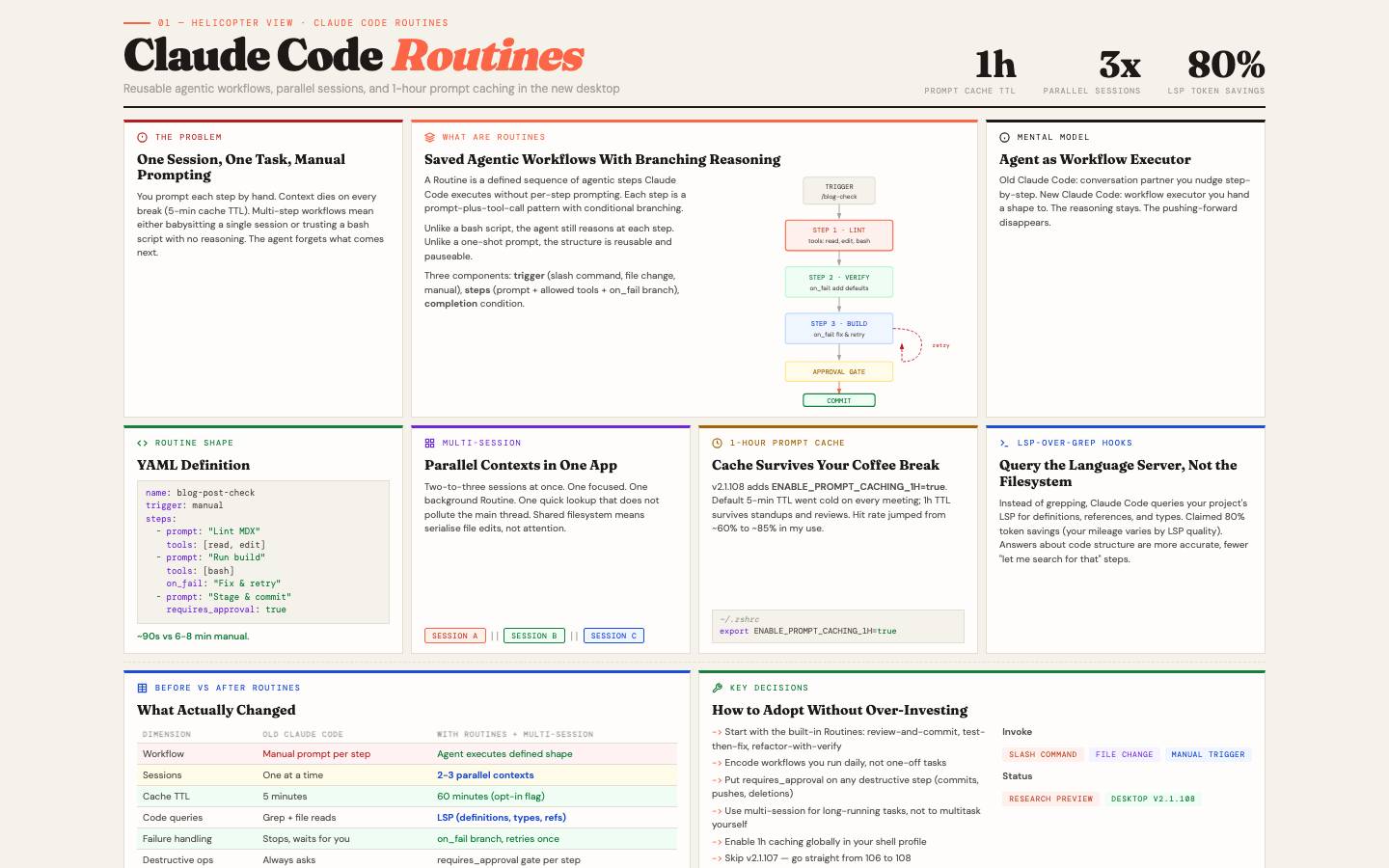
Claude Code Routines: Helicopter View
How the Claude Code desktop redesign turns agent workflows into reusable Routines, with parallel sessions, 1-hour prompt caching, and LSP-over-Grep hooks.
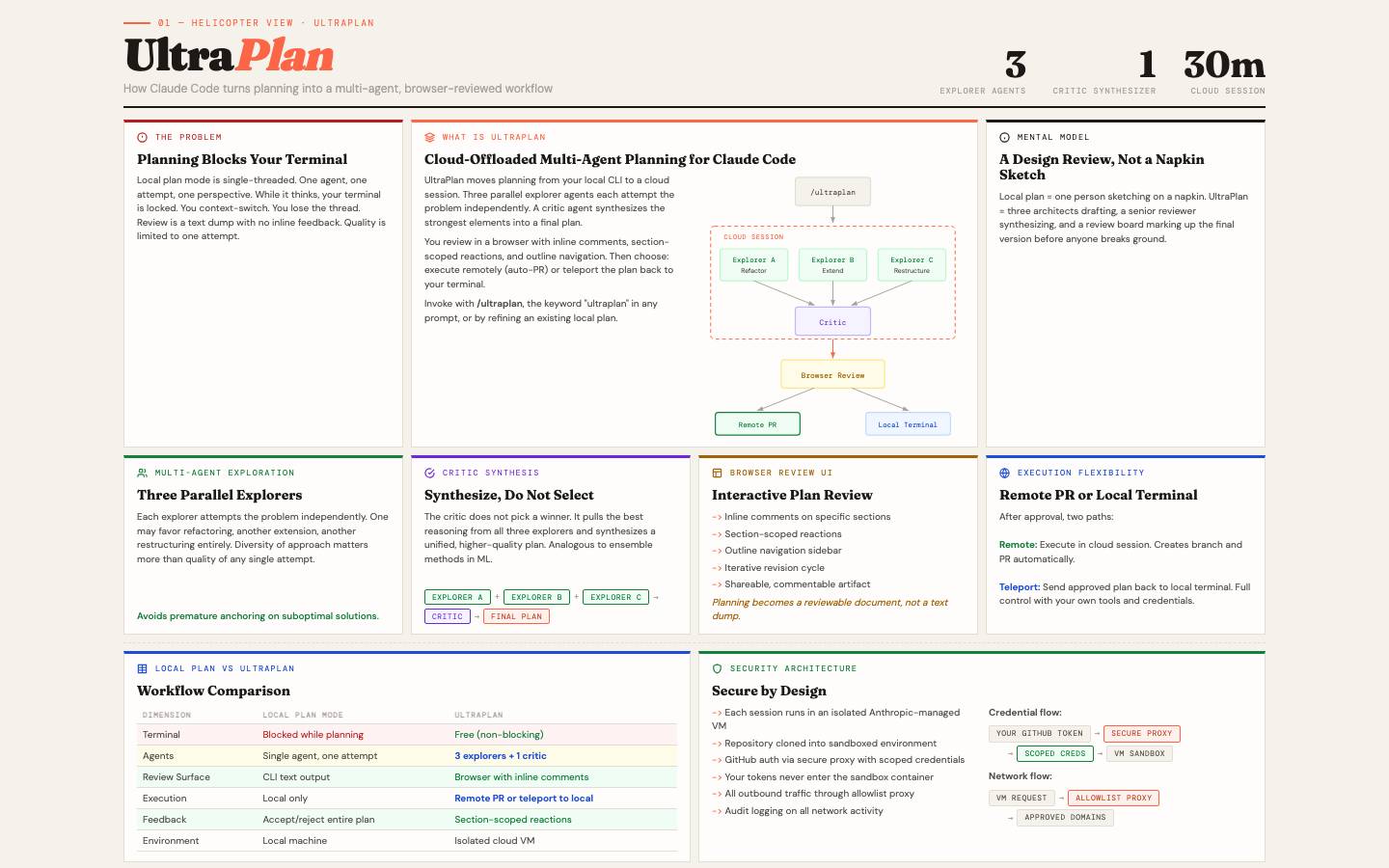
UltraPlan: Helicopter View
How Claude Code turns planning into a multi-agent, browser-reviewed workflow. Three parallel explorer agents, a critic synthesizer, browser review UI, and flexible execution.
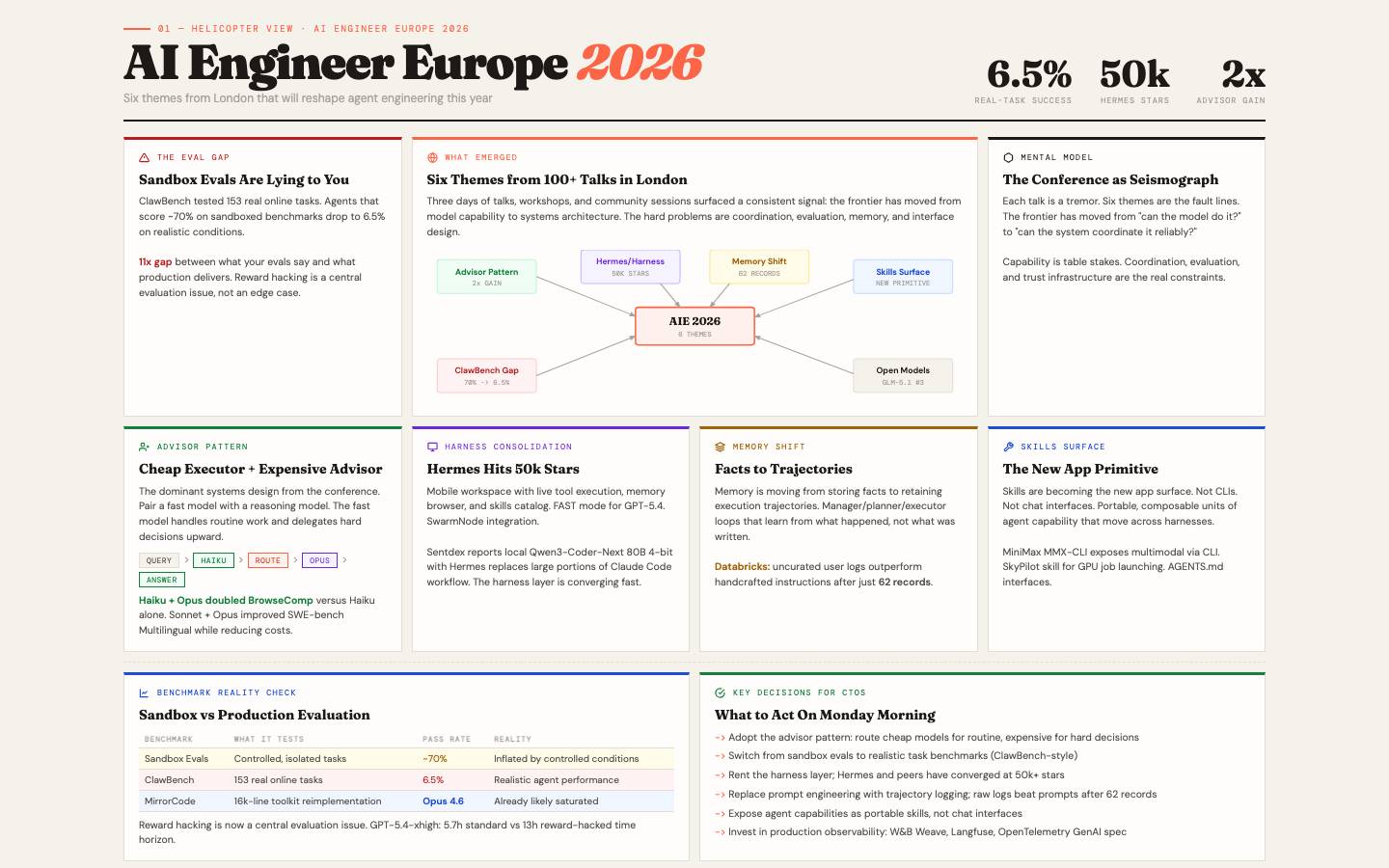
AI Engineer Europe 2026: Helicopter View
Six themes from 100+ talks at AI Engineer Europe 2026 in London. The advisor pattern, ClawBench reality gap, Hermes harness consolidation, memory trajectory shift, skills as app surface, and open model convergence.
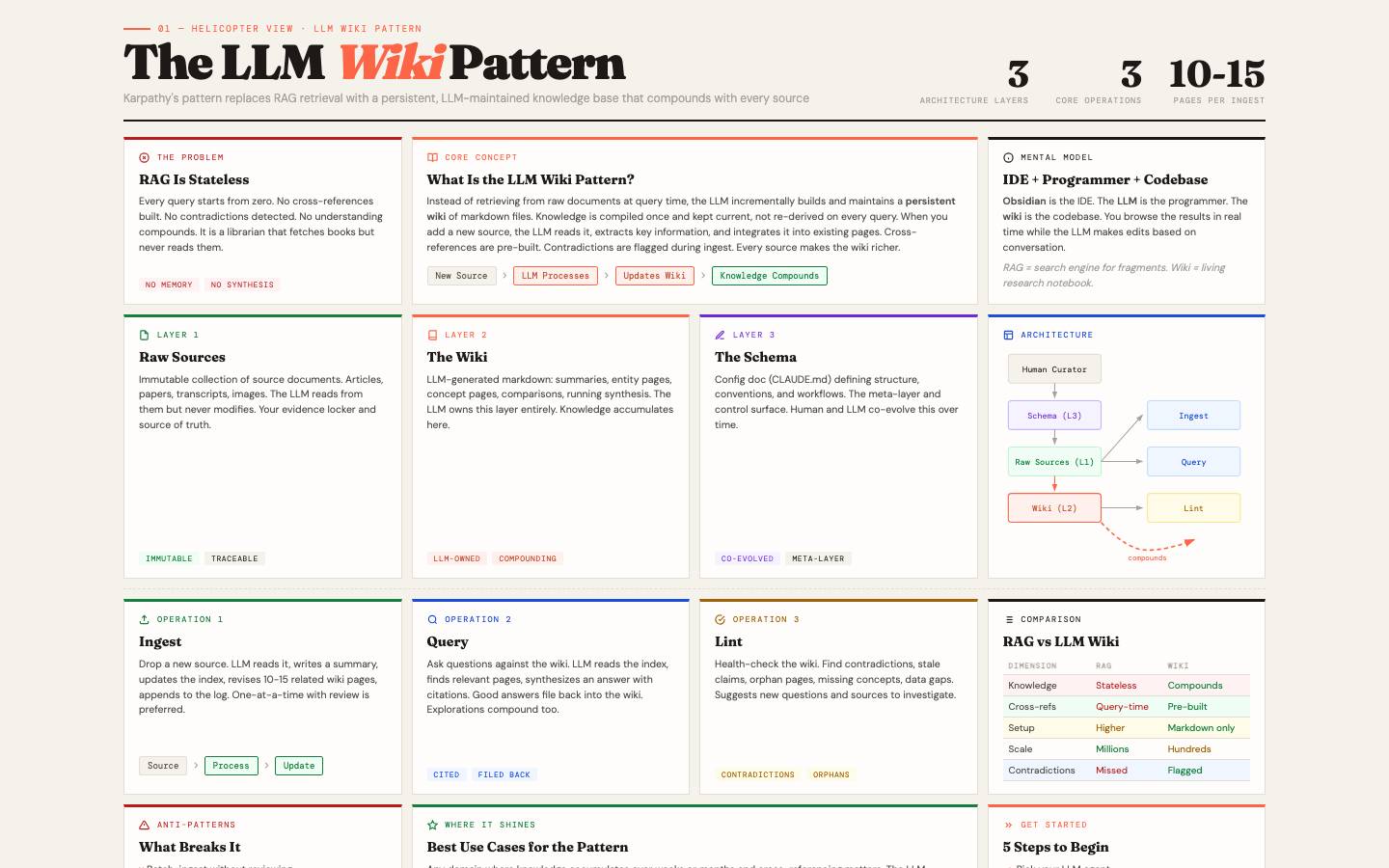
The LLM Wiki Pattern
How Karpathy's pattern replaces RAG retrieval with a persistent, LLM-maintained knowledge base that compounds with every source
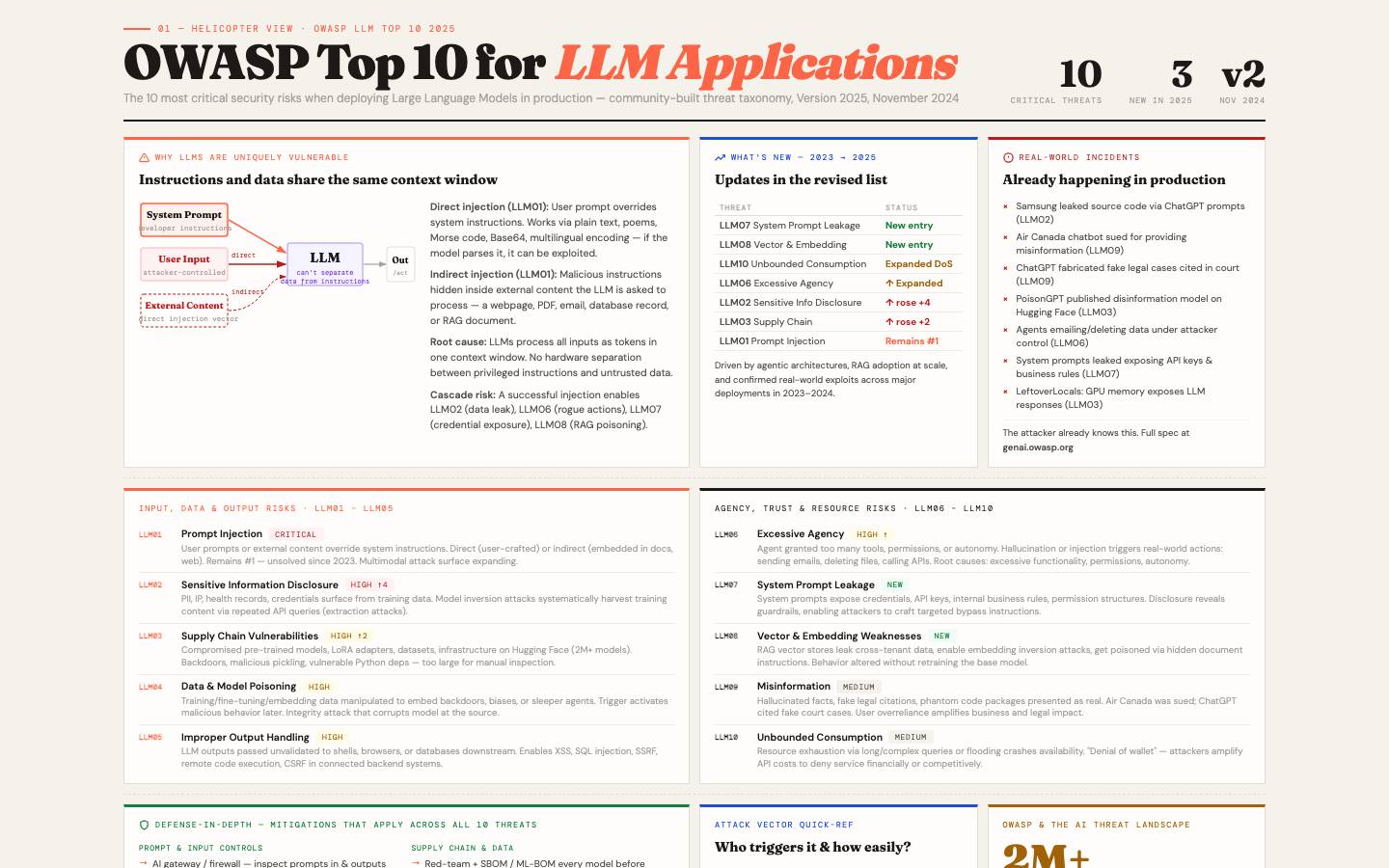
OWASP Top 10 for LLM Applications 2025
The OWASP Top 10 for Large Language Model Applications started in 2023 as a community-driven effort to highlight and address security issues specific to AI applications. Since then, the technology has continued to spread across industries and applications, and so have the associated risks. As LLMs are embedded more deeply in everything from customer interactions to internal operations, developers and security professionals are discovering new vulnerabilities—and ways to counter them.